
1 / 1
Rudrangshu Mukherjee
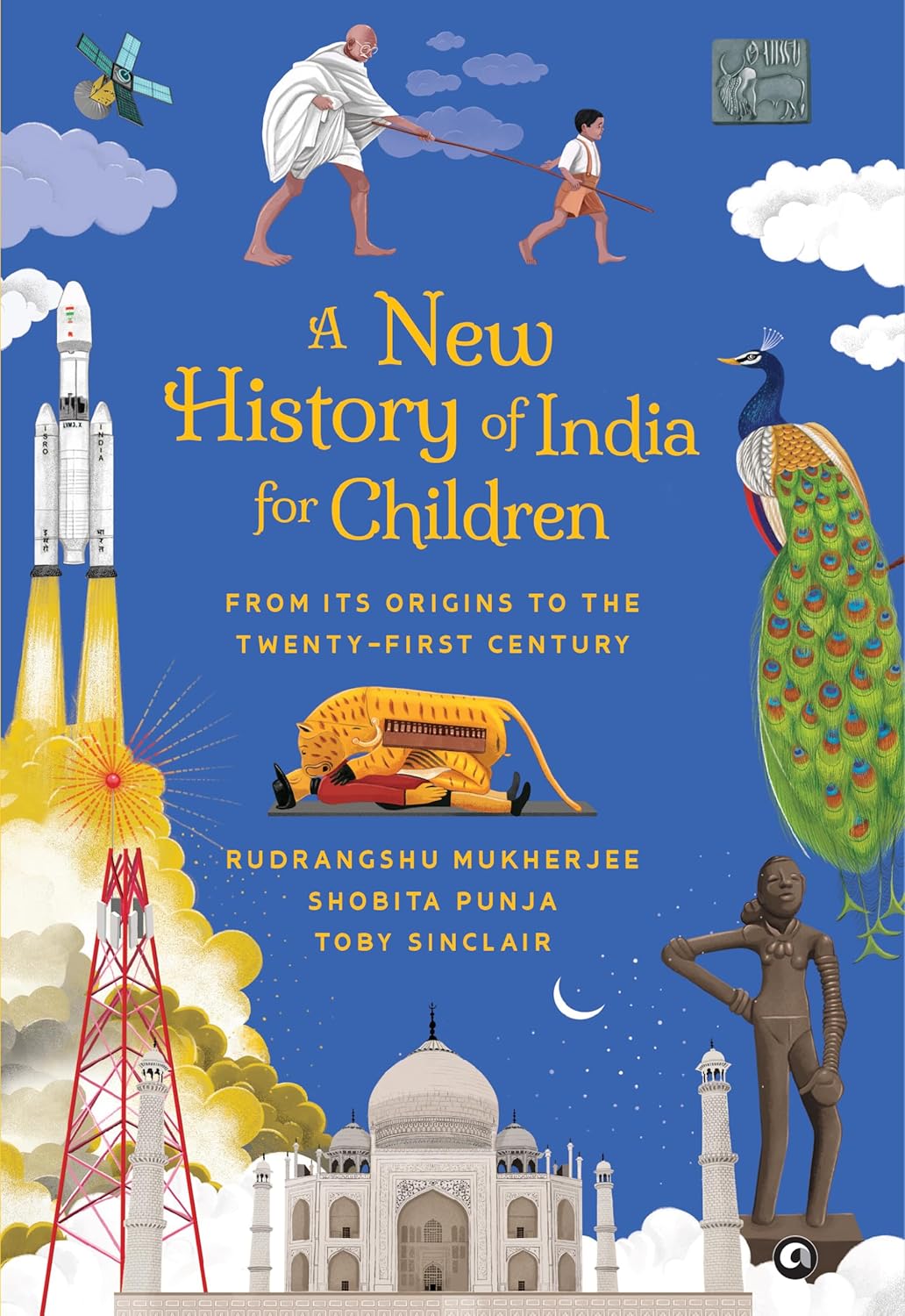
A New History of India for Children: From Its Origins to the Twenty-first Century
₹420.00
₹499.00
SAVE ₹79
Inclusive of all taxes
Product Description
In A New History of India for Children, award-winning historian Rudrangshu Mukherjee along with photographer–archivist Toby Sinclair and the late cultural historian Shobita Punja, tell the story of one of the oldest, most diverse countries in the world with simplicity and clarity. The book touches upon all the most important milestones in India’s history, from the first dinosaurs to roam its lands to the metro that snakes through its modern, metropolitan capital city.
It begins in prehistory, billions of years ago, describing how the geography of India came to be what it is today, and traces the evolution of Indian civilization through key events and people. What began with the Harappan Culture grew and flourished under the Maurya and Gupta empires, was enriched by the Delhi Sultanate and the Mughal empire, and went on to be colonized and exploited by the British Raj. Led to glorious Independence by stalwarts like Mahatma Gandhi, Jawaharlal Nehru, and Sardar Patel, India then suffered the heartbreak of Partition, before evolving into one of the world’s most powerful countries in the twenty-first century.
This complete one-volume history for children, illustrated by maps and full-colour photographs, covers everything from lost cities and epic empires to colonial conquests and modern marvels. There’s something for every young reader in this fascinating account of India’s vibrant and eventful history.
Other Details
| author | Rudrangshu Mukherjee |
|---|---|
| Publisher | Aleph Book Company |
| Categories | Non-Fiction, Shop All Non-Fiction, History & Politics |
| SKU | 8196906129 |
Customer Reviews
Please log in to write a review.
Log InReviews (0)
No reviews yet. Be the first to review this product!
Similar Products
₹420.00
A New History of India for Children: From Its Origins to the Twenty-first Century